爱在旅途
'과학이 놀이터가 된다'…제주항공우주박물관 ‘스페이스 어드벤처'_我的网站

一 | 9월 5~6일 과학공연·체험 융합 프로그램 운영 제주항공우주박물관이 오는 9월 5~6일 '와글와글 JAM나는 과학 놀이터' 프로그램을 운영한다. JDC 제공제주국제자유도시개발센터(JDC)가 운영하는 제주항공우주박물관은 오는 9월 5~6일 과학공연과 체험을 융합한 '와글와글 JAM나는 과학 놀이터_스페이스 어드벤처'를 개최한다고 26일 밝혔다.이번 행사는 지역 과학문화 저변 확대 및 양질의 과학 교육 콘텐츠 제공을 위해 국립광주과학관이 주관하는 '2026 호남권과학관 과학문화 활동 지원사업'의 하나로 마련됐다.제주항공우주박물관은 지난 14일 이 사업에 선정돼 과학프로그램 기획 및 운영비를 확보했다.주요 프로그램은 다양한 실험 속 숨겨져 있는 과학 이야기 ‘스페이스 어드벤처' 공연과 함께 갤럭시 스플래시, 젤리 행성 탐험, 행성 속 작은 바다, 별빛의 비밀 등 관람객이 직접 참여하고 체험해 볼 수 있는 기초 과학 교실 등으로 마련됐다.자세한 사항은 박물관 홈페이지 또는 SNS로 확인할 수 있다.김석주 제주항공우주박물관장은 "도민과 관광객에게 한층 더 풍성한 과학문화 향유 기회를 제공할 기회를 마련했다"며 "전시뿐만 아니라 공연, 예술, 문화가 함께 어우러지는 다양한 프로그램을 통해 지역을 대표하는 복합문화 공간으로 자리매김하겠다고"고 말했다.제주=임동률 기자。
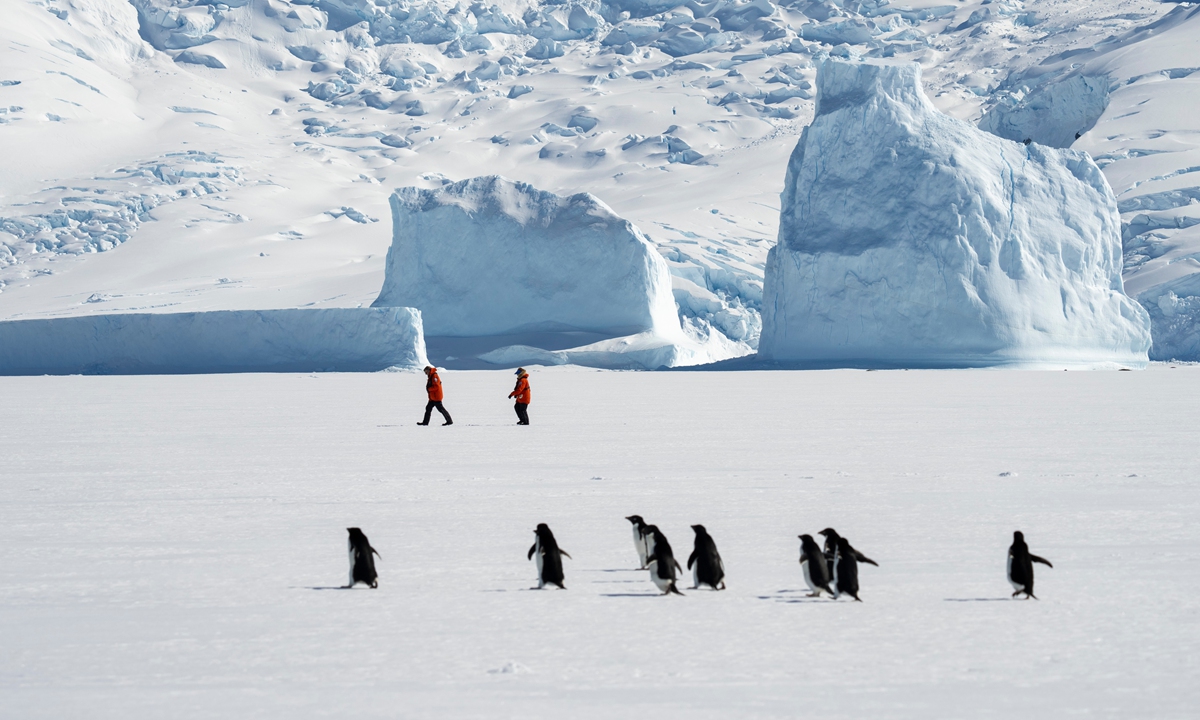
Adelie penguins (Pygoscelis adeliae) on fast ice with tourists walking in the background, Bourgeois Fjord, Marguerite Bay, Antarctica. Photo: VCG
Joint research by Chinese and international scientists have found that the rate of long-term Antarctic mass loss has slowed, driven by sea surface temperature anomalies in the remote tropical warm pool, China Central Television (CCTV) reported on Thursday, citing a statement released by the Institute of Oceanology, Chinese Academy of Sciences (CAS).
The Antarctic ice sheet is one of the major sources of uncertainty in global sea-level rise forecasts. From 2003 to 2024, the Antarctic ice sheet lost an average of approximately 140.5 billion tons each year, CCTV reported.
However, Chinese and foreign scientists have found that the Antarctic ice sheet gained roughly 695 billion tons between July 2021 and April 2023, the largest 22-month mass gain seen in nearly two decades via satellite gravimetry, the Institute of Oceanology, CAS announced on Thursday.
The scientists found out that from 2021 to 2023, sustained heavy snowfall in East Antarctica led to significant increases in snow accumulation, partially offsetting the ongoing ice loss in West Antarctica.
The scientists' research shows that this was caused by tropical ocean-driven atmospheric processes that altered moisture transport pathways and increased snowfall over Antarctica.
The research was conducted by the research team at the Institute of Oceanology at CAS, along with peers from countries including the US, Hungary and Japan. It was published in the academic journal
Nature on Wednesday.
According to Wang Yunhe, first author of the research paper and an associate research fellow at the Institute of Oceanology, sea surface temperatures in the tropical western Pacific warm pool remained unusually warm from 2021 to 2023. As one of the regions with the highest sea surface temperatures and strongest heat release into the atmosphere worldwide, changes in this region can reshape atmospheric circulation.
The persistently warmer-than-normal seawater triggered large-scale atmospheric waves.
After reaching the high latitudes of the Southern Hemisphere, the waves reshaped wind patterns and moisture transport pathways. Moisture-tracking simulations show that water vapor from the mid-latitude Indian Ocean fueled heavy snowfall in East Antarctica, leading to a recovery in ice sheet mass.
Observations and climate simulations suggest that such warming events occur roughly once a decade. But these temporary pauses are not enough to reverse Antarctica's long-term ice loss. The West Antarctic ice sheet continues to shrink, while parts of East Antarctica remain increasingly vulnerable to warmer ocean waters melting ice shelves from below and speeding the flow of glaciers into the sea.
The study shows how persistent warming in the tropical warm pool can contribute to the recovery of Antarctic ice-sheet mass, highlighting the role of East Antarctic atmospheric circulation in connecting tropical climate shifts with changes in the ice sheet. The findings point to a previously overlooked climate link between the tropical warm pool and East Antarctica, offering a new perspective on how distant climate systems may shape the continent's future.
Global Times
。
Current article:http://k4585.yindabobiehonggaonumiao.bond/lzl5n/qg8mf.html
Published on:19:16:55


